Draining a swimming pool sounds like the obvious first step for concrete or plaster repair. It is usually the most dangerous thing you can do to the vessel. When thousands of gallons of water leave a concrete shell, the downward weight that keeps the structure planted disappears. If ground water sits high around the property, that hydrostatic pressure from below can lift the floor, crack the main bowl, or float an entire gunite shell right out of the soil.
Leaving the pool full keeps the hydrostatic balance steady while you work. Our epoxy putty cures completely submerged in water, which means there is no reason to pump out the basin for surface checks and minor plaster splits. You will work under water with a mask, but the shell stays anchored where it belongs.
Why keeping the vessel full is safer
A cubic foot of water weighs over sixty pounds. In a typical backyard pool, that total mass runs into dozens of tons pressing down and out against the earth. Once you dump that load, the empty shell is just a thin concrete boat sitting in dirt.
Plaster also dries out quickly in the sun, leading to crazing and delamination across areas that had no issues before. Working underwater avoids the thermal shock and drying stresses that come with an empty bowl. We formulate the material to cross-link directly against wet gunite, marcite, or pebble finishes without needing dry air to trigger the reaction.
Cracks our material cannot solve
We print it right on our data sheet: not intended for structural applications. If the pool shell has cracked clean through from earth movement or settling, our putty will not hold the pieces together. A rigid patch placed across an active fault will split or pop loose the next time the ground shifts.
Never use our putty on vinyl liners or over working expansion joints. Vinyl moves under tension and sheds rigid epoxy, while expansion joints are designed to flex. Pressurized line leaks also blow mixed material out before it can cure.
Look closely at the water loss. If the pool drops several inches a day, you have a plumbing break underground or a major structural failure. Epoxy putty is for sealing non-structural plaster cracks, filling voids, and securing loose tiles.
Preparing the surface beneath the surface
Underwater preparation feels awkward, but clean substrate is everything. Epoxy cannot bond to loose algae, mineral scale, or crumbling cement paste. You need sound, solid aggregate.
Take a small cold chisel or a stiff scraper down with you. Open the crack so it is at least 1/8 inch deep and wide enough to pack material into. A narrow hairline crack will simply bridge over and peel off later. Scuff the interior edges with a wire brush or coarse abrasive stone to remove slime, then wave your hand over the joint to flush the loosened grit away.
Order of work for placing the patch
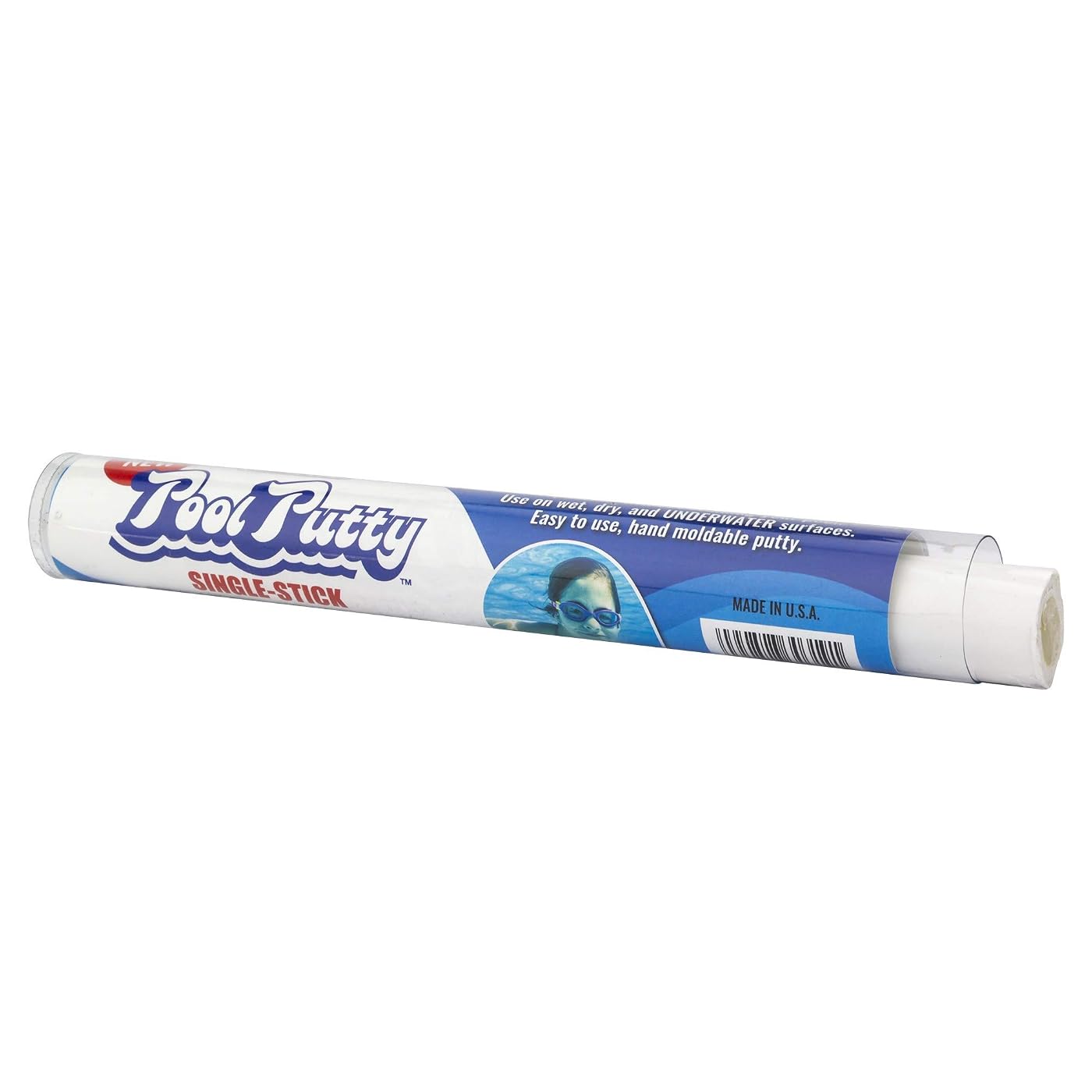
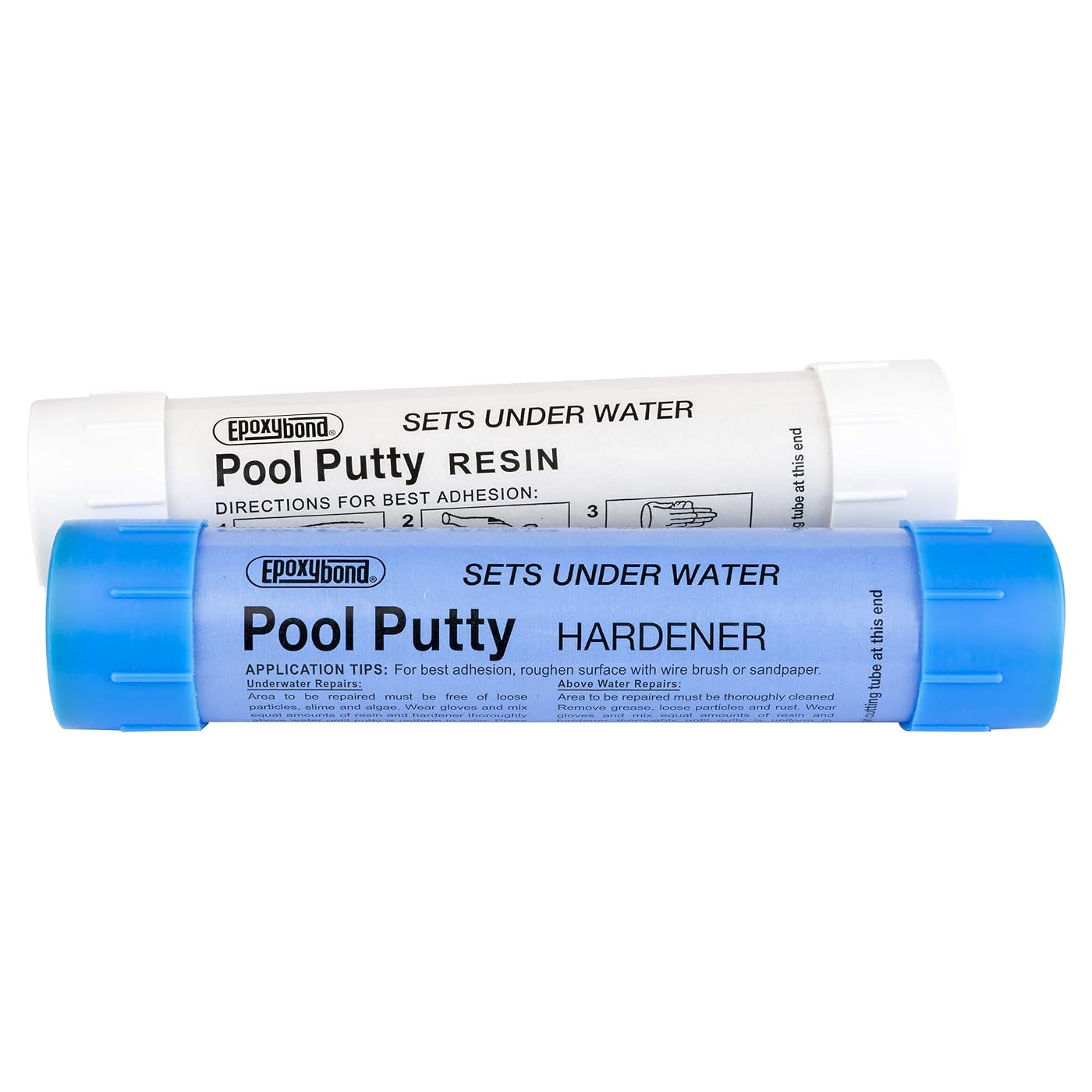
Always mix the putty up on the pool deck where you have light and dry footing. You can use the Single-Stick or cut equal lengths from the 14 oz 2-Part Set. Knead the material by hand for four to five minutes until the streakiness vanishes and the color is uniform throughout.
- Roll the mixed epoxy into a tight rope slightly thicker than the prepared groove.
- Dive down with the roll and start pressing it firmly into the crack from one end to the other, forcing out the trapped water pocket underneath.
- Overfill the void slightly so the putty stands proud of the adjacent plaster.
- Smooth the top with your thumb or a flat margin trowel, feathering the edges flush into the surrounding surface.
- Keep your hands off the patch once shaped so the polymer network can build strength undisturbed.
Understanding the cure schedule under water
Water temperature governs how fast our epoxy cures. In warm 80 F water, the 14 oz set reaches its initial set in about 80 minutes. If the water is down at 60 F, that set time extends out to 3 hours 30 minutes. In a heated spa at 100 F, you only have 40 to 45 minutes before it sets hard.
The material will reach an 8000 psi compressive strength and a 400 psi bond strength to concrete regardless of being submerged. Just give it the time it needs according to the thermometer before you run automated pool cleaners or brush the walls nearby.
Check the water temperature before starting so you know how much working time you have at the wall. Once the putty is shaped and feathered into the plaster, step away and let the chemistry run its course.