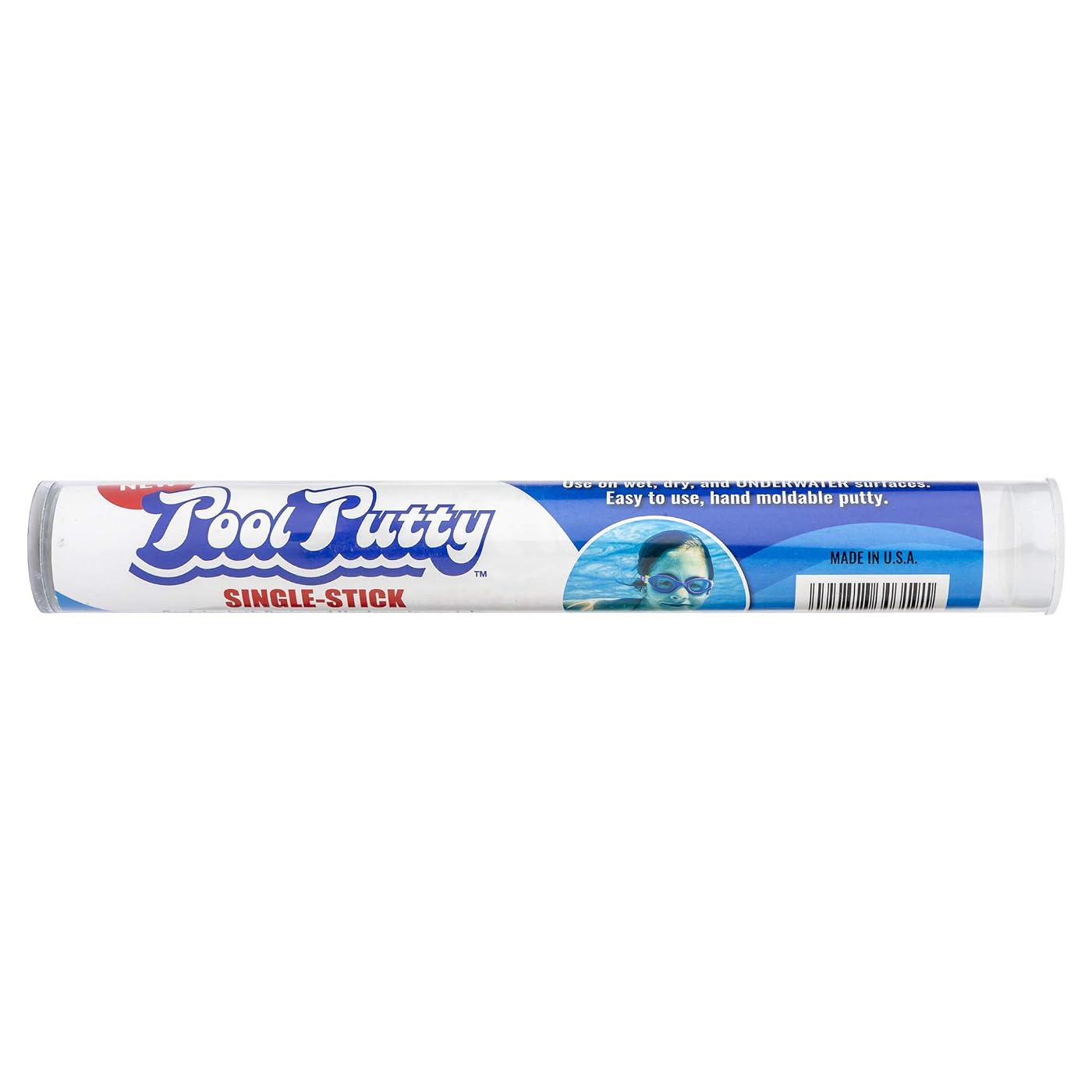
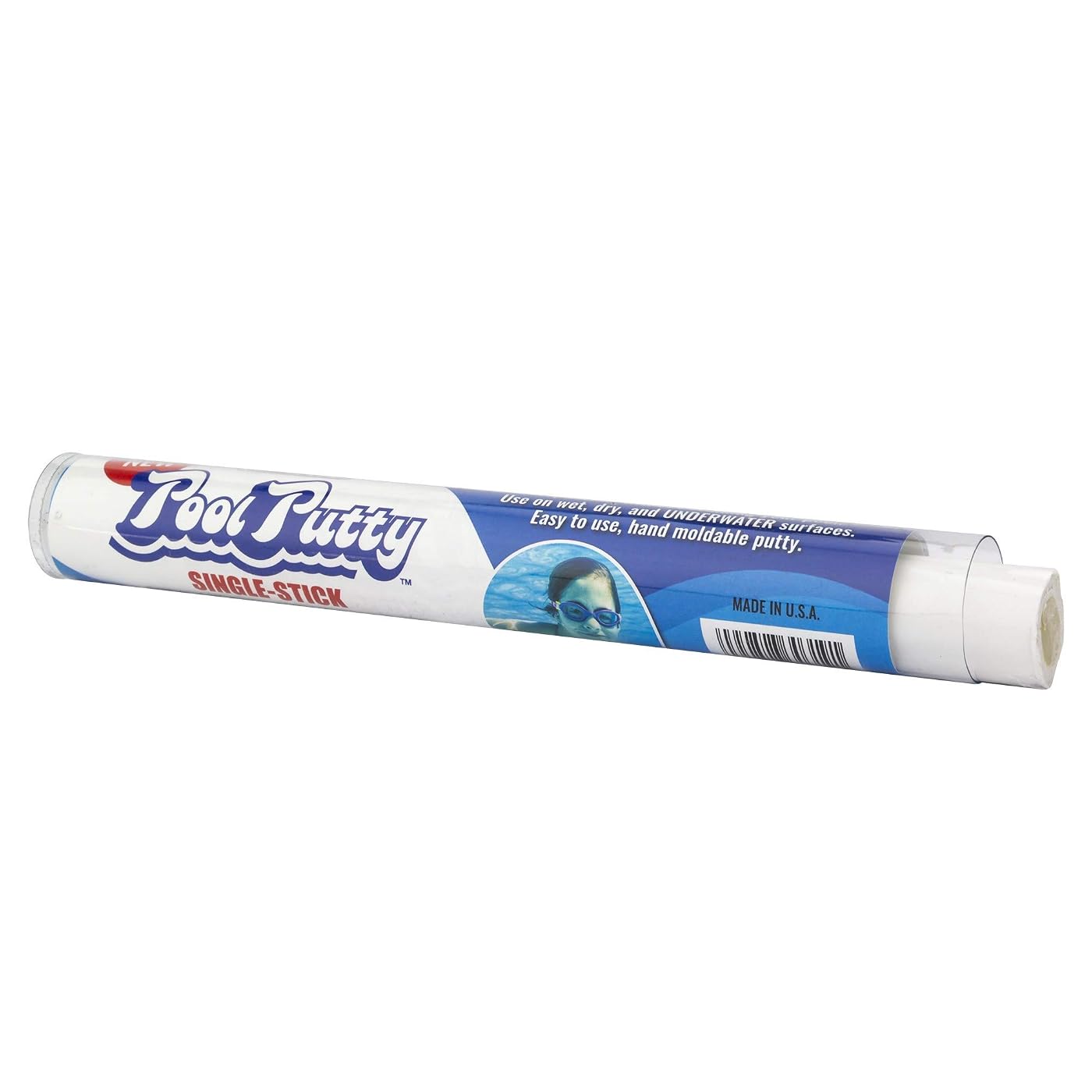
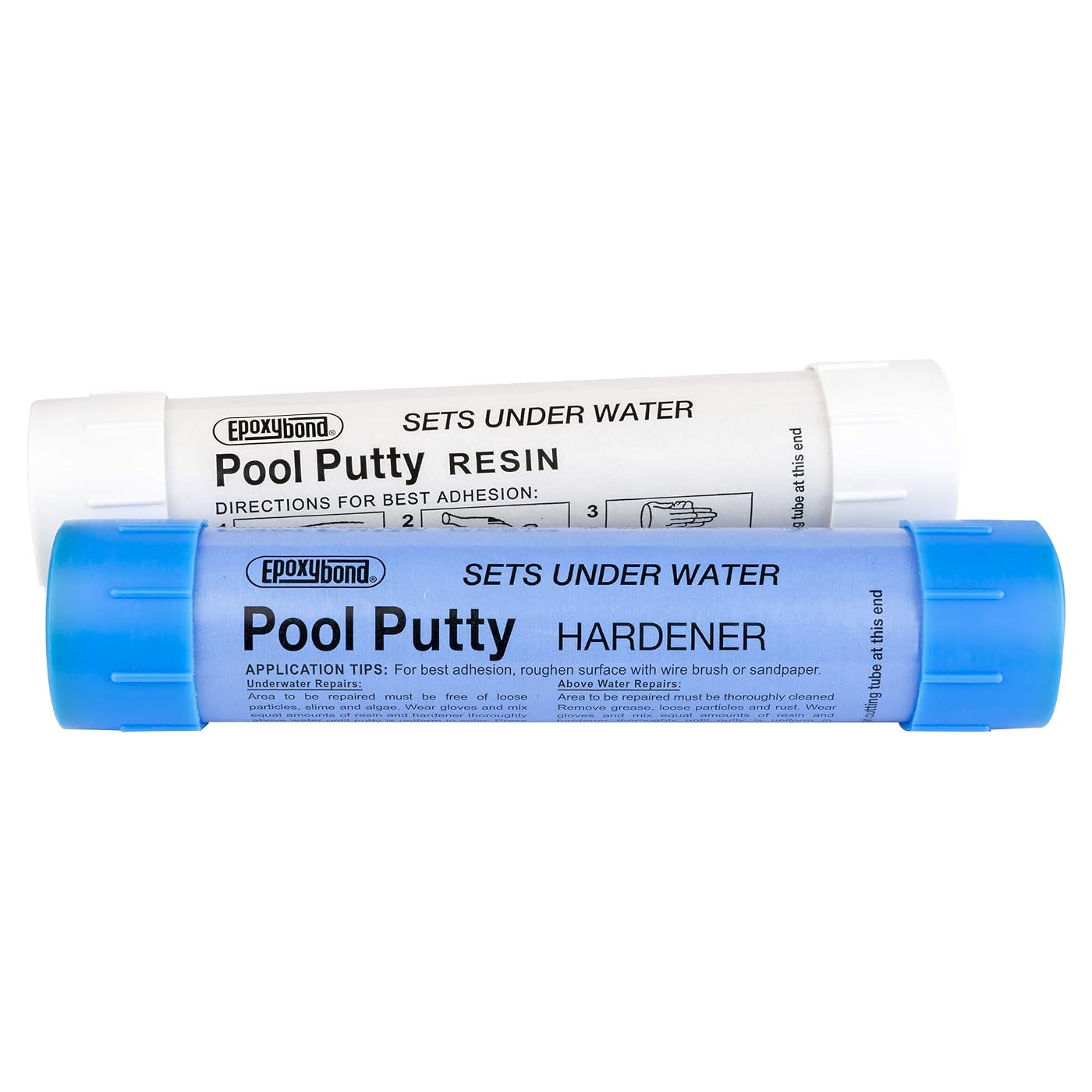
At our plant in Mertztown, we formulate Epoxybond Pool Putty to stick to heavy masonry, cured polymers, and metals commonly submerged in treated pool water. It cures underwater, handles 8000 psi of compressive load, and shrinks by about 1 percent as the cross-linking finishes. The bond strength on clean concrete reaches 400 psi.
The chemistry is straightforward, but the bond fails when someone presses the putty against slime, loose aggregate, or shiny factory finishes. Every substrate needs mechanical tooth and clean base material. If you smear epoxy over a dirty surface, you are simply bonding the putty to the dirt.
Mineral surfaces like concrete, gunite, and plaster
Concrete, gunite, and plaster substrates give the putty an ideal mechanical bite because of their natural porosity. We see excellent results on standard marcite and exposed pebble aggregates, provided the loose matrix is gone.
You have to scrape down to sound material. Old plaster softens over time, and gunite surfaces often collect calcification or algae films. Use a wire brush or an old chisel to clear the fissure down to bare mineral. The crack needs to be opened to a minimum application thickness of 1/8 inch. If you feather the patch out to the thickness of paper, water movement will eventually lift that thin edge. Pack the putty solidly into the void so it grabs the solid wall behind.
Why gelcoat requires aggressive sanding
Fiberglass gelcoat is the surface pool owners ruin repairs on most often. Gelcoat comes out of the mold smooth, slick, and chemically inert. If you press mixed putty onto glossy gelcoat underwater, it will pop loose within weeks. The epoxy cannot bite into a glossy resin coat.
You must scuff the fiberglass until it is visibly dull. Take coarse sandpaper or a rough abrasive pad down with you and sand away the gloss completely around the repair zone. You want visible scratch marks across the entire contact patch. Once the surface is abraded and free of algae or oils, our mixed putty keys into those micro-scratches and holds tight under water.
Glazed tile and swimming pool fittings
Ceramic tile bonds reliably if you prepare the right surface. The shiny glaze on tile behaves just like glossy gelcoat: it is too slick. If you are resetting a loose tile, clear off the old crumbling mortar from the shell and butter the unglazed, porous back of the tile with mixed putty before pressing it into place.
- Ceramic tile backs need loose mortar scraped away to expose the dry clay body.
- PVC fittings and rigid plastic skimmer throats must be heavily abraded to remove slick mold-release residues.
- Metal fixtures like light niches or brass grounding parts must be scraped or wire-brushed clean to bright metal.
- Dry wood deck trim can be patched above the water line, but never use our putty on submerged wood.
Surfaces and failures the putty cannot fix
Our data sheet states clearly that this material is not intended for structural applications. Do not use it across expansion joints or on moving structural shell cracks.
The one common pool surface our putty does not suit is a flexible vinyl liner. Epoxy cures into a hard, rigid mass. A vinyl liner is an elastic membrane hanging under constant water tension that flexes as the pool fills, drains, or shifts with seasonal temperatures. The rigid patch cannot move with the plastic sheet. The bond line shears and tears open at the perimeter. A flexible vinyl patch kit is the right tool for that job, and we do not manufacture one.
The putty will also fail if you try to pack it into a pipe under active line pressure. Pressurized water pushes the fresh plug out before it reaches its set time. It will not bridge an expansion joint designed to absorb deck movement, nor will it stop a pool that is losing inches of water a day due to broken underground plumbing.
Before you step into the water, open your crack or gouge to at least 1/8 inch deep, scrub the base clean, and abrade slick surfaces until the shine is completely gone. Mix the material on the deck until all streaks vanish, carry it down immediately, and press it firmly into the target area to displace the water film.