A swimming pool holds tens of thousands of gallons at room temperature or slightly warmed. Spas, decorative fountains and backyard ponds change those conditions completely. You are dealing with much hotter water, much smaller water volumes, or live fish and plants that react poorly to chemical changes.
The chemistry in our Epoxybond sticks and two-part sets remains the same across all of these jobs. What changes is your working window and how you manage the water while the resin cures. Here is what to watch for when you step away from standard pool shells.
Hot water accelerates the cure
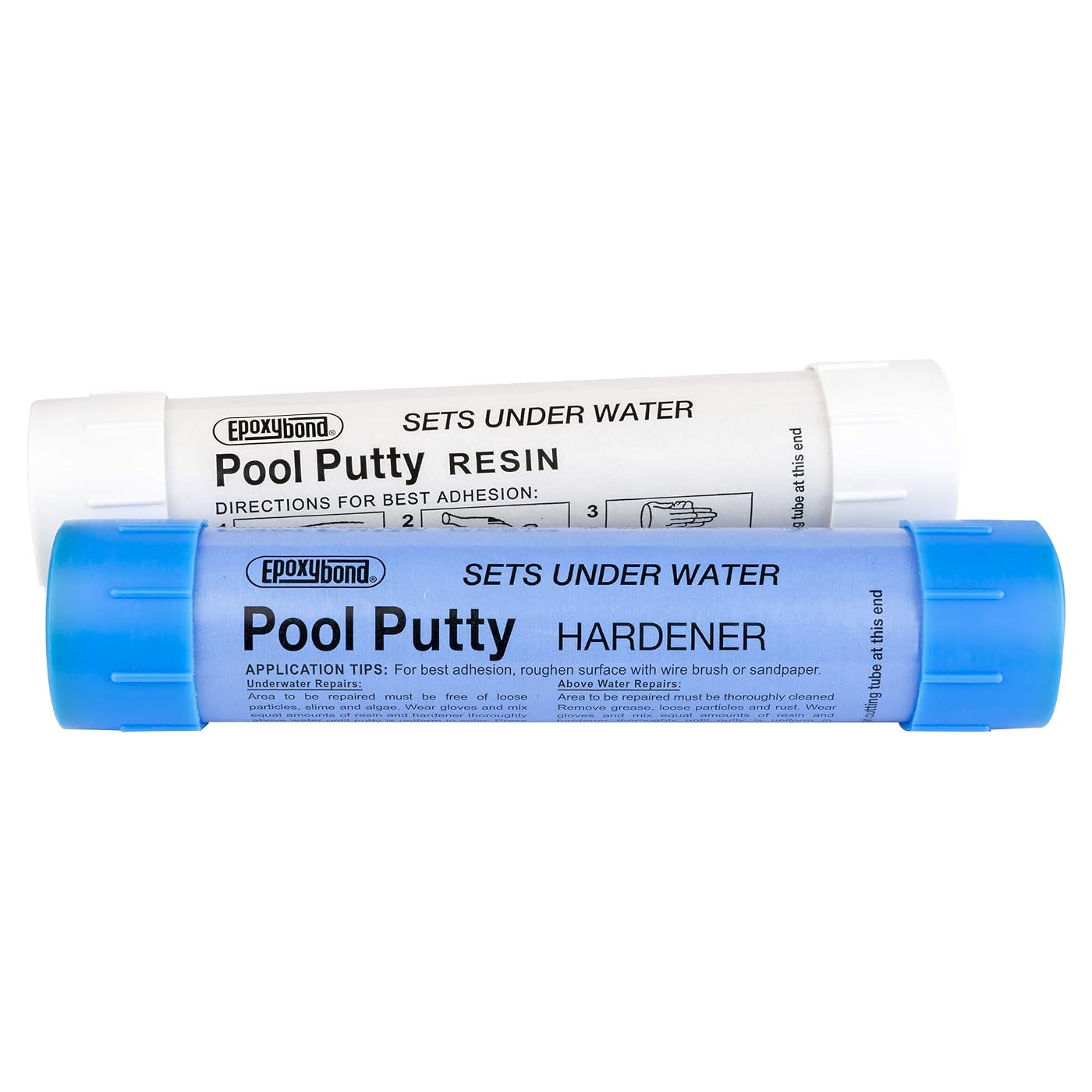
Heat speeds up the epoxy crosslinking reaction dramatically. In a pool at 70 F, our 14 oz two-part set takes about 2 hours to set. Take that same batch into a hot tub running at 100 F and your set time drops to 40 to 45 minutes. If the water reaches 120 F, you have only 20 to 25 minutes before it hardens.
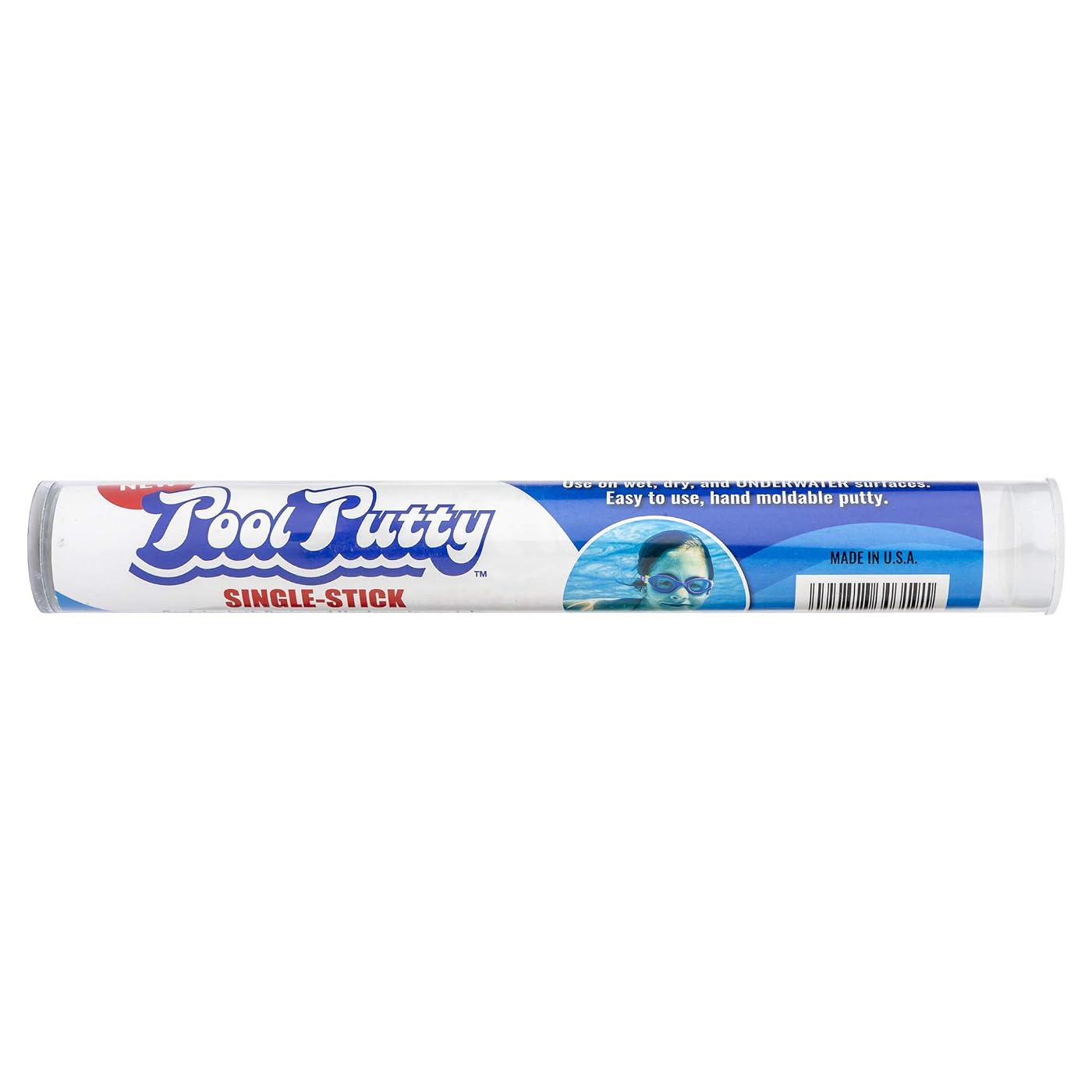
Our Single-Stick format acts even faster. Under standard conditions it gives you a working life of 5 to 15 minutes and sets in 20 to 30 minutes. In hot spa water, you must work immediately. Mix your resin and hardener completely on the deck, carry it straight down, and seat it in place without hesitation.
Do not mix more material than you can place within five minutes if you are working in heated spa water. Once the mass begins to stiffen, pressing it will break the developing bond.
Temperature ratings and service limits
The continuous service temperature depends on which package format you choose at the plant. The 14 oz two-part set has a continuous service temperature rating up to 150 F, and handles 200 F intermittent exposure. That provides a safe margin for any residential spa or hot tub.
If you are patching near heat sources or hot supply fittings where water temperatures run higher, the Single-Stick formulation has a continuous service temperature range of minus 40 to 250 F, and up to 300 F intermittent. Neither formulation will soften or release under normal operating heat.
Small volumes and aquatic life
Ponds and ornamental water features present a different risk: water volume. An unmixed smear of epoxy base or amine hardener will disperse into the water column. In a large pool, dilution prevents harm. In a small garden pond or closed fountain, raw resin can harm fish and cloud the water.
Always knead the putty thoroughly above water for four to five minutes until the color is completely uniform with no streaks or marbling. Fully mixed putty stays coherent underwater and cures into an inert solid. For delicate koi ponds, isolating the fish or dropping the water level below the repair area during the 1 to 2 hour full cure eliminates the risk entirely.
Fountain basins and substrate limits
Fountains crack for the same reasons pool shells crack: ground movement, settlement, or freezing. Epoxybond yields a compressive strength of 8000 psi and bonds to concrete with 400 psi of adhesion, but the data sheet states plainly that it is not intended for structural applications.
If a fountain bowl has split because the ground dropped underneath it, putty cannot hold the structure together. It will seal stable hairline plaster cracks, secure loose tiles, or plug leaking pipe penetrations through gunite.
- Concrete and plaster must be carved out to a minimum depth of 1/8 inch so the patch does not feather out to nothing.
- Ceramic tile must be cleaned of algae and mineral scale before pressing mixed putty into the joint.
- PVC fountain nozzles and conduit must be abraded with coarse paper because smooth factory plastic resists adhesion.
- Flexible vinyl liners cannot be patched with rigid epoxy because the moving liner peels away at the edges.
Cut equal portions, mix until the color is completely uniform, and press the mixed putty firmly into the seam to displace standing water. Once the material is seated and smoothed, leave it alone until the cure completes.